What GPA Do You Need for Nursing School? (And What If Yours Is Too Low?)
Wondering what GPA you need for nursing school? Learn the minimum GPA requirements, what schools look for, and what to do if your GPA is below average.

If you're thinking about becoming a nurse, you've probably asked yourself this question: "Is my GPA good enough for nursing school?"
It's one of the most common concerns for future nursing students, especially adults returning to school after years away from the classroom.
The good news is that a lower GPA does not mean your nursing dream is over.
Every nursing program has its own admission requirements. Some schools are more competitive than others, and many look at much more than just your overall GPA.
What GPA Do You Need for Nursing School?
There isn't one GPA requirement that applies to every nursing school.
In general:
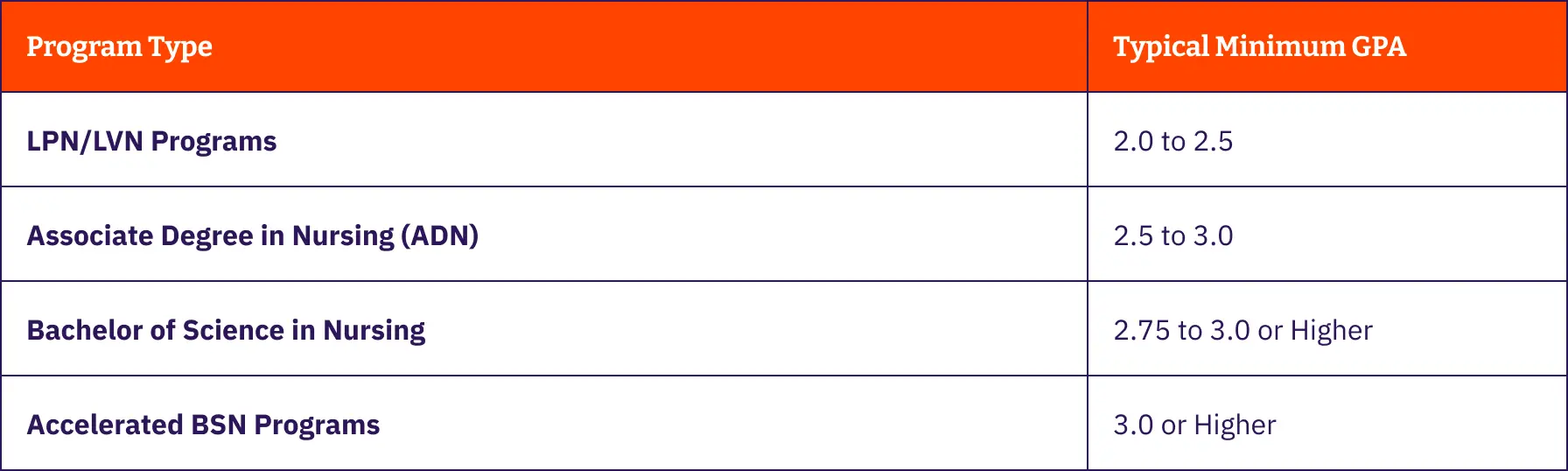
Keep in mind that these are often the minimum GPA requirements to apply.
Competitive nursing programs may admit students with much higher GPAs because they receive more applications than available seats.
Minimum GPA vs. Competitive GPA
This is where many applicants get confused. A school may say you need a 2.5 GPA to apply. That does not mean everyone admitted had a 2.5 GPA.
If hundreds of students apply for a limited number of seats, schools often accept applicants with the strongest overall applications. That may include higher GPAs, strong entrance exam scores, healthcare experience, or excellent prerequisite grades.
Can I Get Into Nursing School With a 2.5 GPA?
The answer is: Yes, it's possible.
Many ADN programs list a 2.5 GPA as their minimum admission requirement. Some BSN programs also accept applicants with a 2.5 GPA, although they may be more competitive.
Your chances depend on several factors, including:
- Your science GPA
- Your grades in prerequisite courses
- Your TEAS or HESI entrance exam scores
- Healthcare work experience
- The number of applicants that year
- The admission process used by the school
A 2.5 GPA may not close every door, but it does mean you'll want to be strategic about where you apply.
Your Science GPA May Matter Even More
Many nursing schools calculate two GPAs:
- Your overall GPA
- Your science GPA
Your science GPA includes courses like:
- Anatomy & Physiology
- Microbiology
- Biology
- Chemistry
These classes help predict how you'll perform in nursing school.
If your overall GPA is lower because of classes you took years ago, but you've earned strong grades in your science prerequisites, that can strengthen your application. Many nursing programs place extra emphasis on science coursework.
What If Your GPA Is Too Low?
If your GPA doesn't meet the minimum requirement for the schools you're interested in, don't panic. You still have options.
Retake prerequisite courses.
Many colleges allow students to repeat classes to improve their grades. Some schools use the higher grade, while others average both attempts, so always check each school's policy.
Earn strong grades moving forward.
Admissions teams like to see improvement. A strong recent academic record can show you're ready for the challenge of nursing school.
Prepare for entrance exams.
A high TEAS or HESI score can help strengthen your application at schools that consider entrance exam performance.
Apply to multiple programs.
Every nursing school evaluates applicants differently. A program that seems out of reach may not be your only option.
Focus on What You Can Control
You can't change grades you earned years ago overnight. But you can control what happens next.
You can:
- Complete your remaining prerequisites.
- Improve your study habits.
- Earn stronger grades going forward.
- Prepare carefully for entrance exams.
- Research nursing schools that match your academic background.
Many successful nurses didn't have perfect GPAs. They built stronger applications over time and found programs that were the right fit.
Don't Let One Number Define Your Future
Your GPA is important, but it is only one part of your story.
Admissions teams often look at the whole picture, including your academic progress, healthcare experience, personal motivation, and readiness for a demanding nursing program.
If you've been out of school for several years, remember that today's student isn't the same person you were at 18 or 20.
Many adult learners perform better because they have clear goals, stronger time management skills, and real-world experience.
Frequently Asked Questions
What is the minimum GPA for nursing school?
Many ADN programs require at least a 2.5 GPA, while BSN programs often require a 2.75 or 3.0 GPA. Requirements vary by school.
Can I get into nursing school with a 2.5 GPA?
Yes. Some nursing schools accept students with a 2.5 GPA, especially if they have strong prerequisite grades, good entrance exam scores, or relevant healthcare experience.
Do nursing schools look at my overall GPA or science GPA?
Many schools consider both. Science courses like Anatomy & Physiology and Microbiology often carry extra weight during the admissions process.
Can I improve my chances if my GPA is low?
Yes. Retaking prerequisite courses, earning better grades in future classes, preparing for entrance exams, and applying to multiple schools can all strengthen your application.
Your GPA Is Just the Beginning
If your GPA isn't exactly where you want it to be, don't assume your nursing journey is over.
Thousands of adult learners have successfully returned to school, completed their prerequisites, and achieved their goal of becoming registered nurses.
The key is understanding your options and building a plan that works for your situation.
If you're planning your next steps, these articles and videos from the Achieve Test Prep blog can help:
- Can My Old College Credits Still Count?
- What Are the Most Common Nursing School Prerequisites?
- Can You Work Full Time While Becoming a Nurse?
- How Long Does It Take to Become an RN?
- What Is Credit by Exam?
No matter where you're starting, remember this: your GPA is one piece of your application. It does not define your future, and it does not have to stop you from pursuing a career in nursing.